
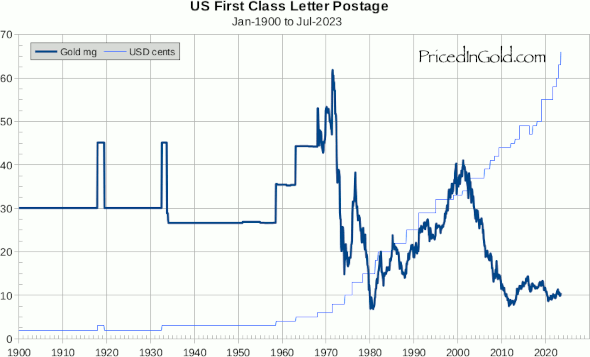
This chart shows the cost of US first class postage for a normal letter. From 1900 through most of 1917, postage was 2 cents. DUring WWI, postage rose to 3 cents to raise funds for the military (a 50% price increase), but returned to 2 cents in 1919 and stayed there until mid-1932. It was raised again to 3 cents, where it stayed until 1958. Interestingly, this price hike was offset by the drop in the value of the dollar when FDR confiscated US gold.
Since 1958 postage prices have risen steadily, reaching 44 cents today, with a further increase to 46 cents planned for January of 2011.
But the true cost of postage, like many of the things we buy every day, is not shown in the dollar price. From the 1950s until 1971, it took more and more gold to pay for a letter. After 1971, the rapidly falling value of the dollar meant that less and less gold was needed to post a letter; from 1971 to 1981, the cost of a stamp fell from 62 mg of gold to just 7 mg. During the 80s and 90s, the USD stabilized and even gained in value a bit, so postage rates rose both in dollars and in gold until 2001. From that point, despite continued rises in dollar terms, they have fallen for the last 10 years in gold terms to their current bargain price of around 12 mg.
What about the new "Forever Stamps"? So far, they have been a losing proposition! It has taken less and less gold to buy postage with each pasing year, and since postal rate increases are limited by the government's consumer price index, which dramatically understates the true rate of currency depreciation, the price of postage in gold is likely to fall in the years ahead as well.

Pings on US Postage
Comments on US Postage
Forever stamps might not be a bargain in investment terms, but I'll keep buying them (in small quantities) just the same. I love the convenience of being able to put a stamp on an envelope without having to worry that the price of postage may have gone up since the last time I bought stamps and maybe I'll have to buy some "make up" stamps to make my old ones current. Since I don't pay any bills by mail any more, a packet of stamps lasts me multiple years. I notice almost none of my incoming mail has real stamps any more either.
The reason why U.S. postal rates (primarily first class) have not increased that much is because by law any increase is limited to the CPI. Since the methodology for calculating the CPI has been manipulated/modified to make the CPI appear less than it with otherwise be under the methodology used during the 1980’s, rate increases have been less than they would otherwise be.
There is another perverse effect from this. Because USPS expenses are increasing faster than the new bogus CPI, and since it cannot cover the increases with increases in rates, the USPS is losing money every year and is now facing bankruptcy sans a bailout from Congress. It has not helped that first class mail volumes are down greatly in the last several years on account of email.